

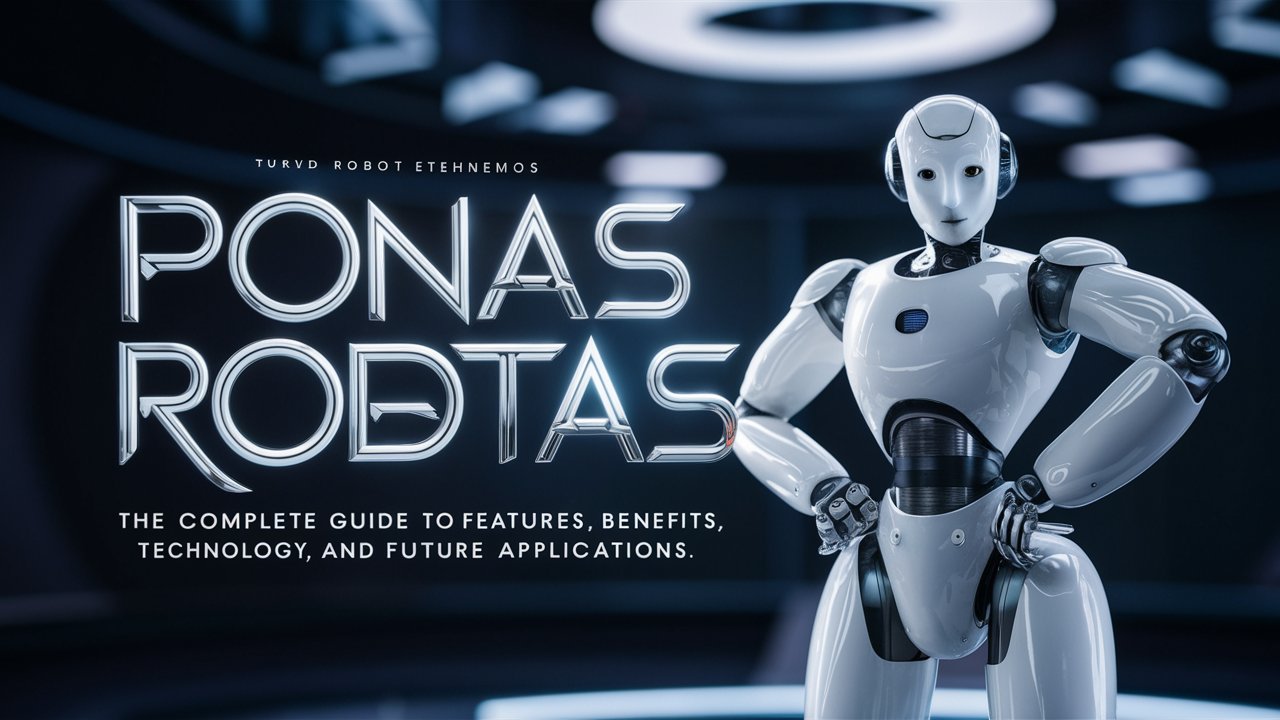
Technology continues to transform the way people live and work, and robotics is one of the most exciting fields driving this evolution. Among the emerging topics attracting attention is Ponas Robotas, a term that has sparked curiosity among technology enthusiasts, students, businesses, and innovators alike. Whether people are searching to understand its meaning, learn about its capabilities, or explore how robotics can improve everyday life, Ponas Robotas has become an increasingly searched keyword.
Robotics today extends far beyond factory automation. Intelligent machines are now helping in healthcare, education, logistics, agriculture, customer service, manufacturing, and even household tasks. As automation continues to expand globally, understanding concepts like Ponas Robotas becomes increasingly valuable for anyone interested in modern technology.
This comprehensive guide explores everything you need to know about Ponas Robotas, including its meaning, technological foundation, features, benefits, practical applications, future developments, and why it continues to gain popularity online.
What Is Ponas Robotas?
Ponas Robotas refers to a robotics-related concept that has generated growing interest across technology communities. The phrase combines ideas associated with intelligent machines capable of performing tasks automatically or with minimal human intervention.
Modern robots are built using several advanced technologies working together. Artificial intelligence allows machines to make decisions, machine learning enables continuous improvement, computer vision helps robots interpret visual information, while sophisticated sensors allow them to interact safely with their surroundings.
Ponas Robotas represents the ongoing advancement of intelligent automation where machines become increasingly capable of supporting human activities in various industries.
The Evolution of Robotics
The history of robotics stretches back many decades. Early robots were designed primarily for repetitive industrial work such as welding, assembling products, and handling heavy materials. These machines followed simple programmed instructions without adapting to changing environments.
Today’s robotic systems are dramatically different. They can analyze information, recognize objects, navigate complex spaces, communicate with humans, and even learn from previous experiences.
Several technological breakthroughs have contributed to this evolution:
- Artificial Intelligence
- Machine Learning
- Internet of Things (IoT)
- Cloud Computing
- Computer Vision
- Advanced Sensors
- High-Speed Processors
- Autonomous Navigation Systems
These innovations have paved the way for smarter robotic solutions like those associated with Ponas Robotas.
Key Features of Ponas Robotas
One reason Ponas Robotas attracts attention is the range of advanced capabilities commonly associated with modern robotic systems.
Intelligent Automation
The robot can automate repetitive tasks efficiently while reducing human workload. Automation improves productivity and minimizes operational costs.
Artificial Intelligence
AI enables robots to process information, recognize patterns, solve problems, and make intelligent decisions based on available data.
Sensor Technology
Modern robots utilize cameras, ultrasonic sensors, infrared sensors, lidar, GPS, and motion detectors to understand their environment.
High Accuracy
Robotic systems can perform repetitive operations with remarkable precision, significantly reducing human error.
Continuous Operation
Unlike humans, robots can often work continuously with minimal downtime, increasing overall efficiency.
Adaptability
Advanced software allows robotic systems to update, learn, and improve their performance over time.
How Ponas Robotas Works
Every intelligent robotic system relies on several interconnected components working together.
Sensors
Sensors collect environmental information including distance, temperature, movement, light, sound, and object location.
Processing Unit
The onboard computer analyzes incoming data and determines the appropriate response.
Artificial Intelligence Algorithms
Machine learning models evaluate previous experiences and improve future decision-making.
Actuators
Actuators transform digital instructions into physical movement, allowing the robot to walk, lift, rotate, or manipulate objects.
Communication Systems
Wireless connectivity enables remote monitoring, software updates, and cloud-based intelligence.
Together, these components create a responsive robotic system capable of performing increasingly complex tasks.
Benefits of Ponas Robotas
The popularity of robotics continues to grow because of the numerous advantages offered across industries.
Increased Productivity
Robots perform repetitive tasks much faster than manual labor, helping organizations increase output.
Reduced Costs
Automation decreases long-term operational expenses by minimizing repetitive manual work.
Improved Safety
Robots can handle hazardous environments, protecting workers from dangerous situations.
Greater Precision
Industries requiring exact measurements benefit from robotic consistency and accuracy.
Better Quality Control
Automated inspections reduce manufacturing defects and improve product reliability.
Twenty-Four Hour Operation
Robotic systems can operate around the clock with minimal interruption.
Applications of Ponas Robotas
Manufacturing
Factories use robots for assembly, welding, packaging, quality inspection, and material handling.
Healthcare
Medical robots assist surgeons, support rehabilitation, transport medications, and improve patient care.
Education
Educational robots help students learn programming, engineering, mathematics, and artificial intelligence through hands-on experiences.
Agriculture
Smart robots monitor crops, automate harvesting, detect plant diseases, and optimize irrigation.
Warehousing
Distribution centers rely on robotic systems for inventory management, order fulfillment, and package transportation.
Customer Service
Businesses increasingly use robotic assistants for information desks, hospitality services, and retail interactions.
Artificial Intelligence and Ponas Robotas
Artificial intelligence serves as the brain behind modern robotics.
AI enables robots to:
- Recognize speech
- Understand images
- Detect objects
- Plan movements
- Learn from experience
- Solve complex problems
- Predict outcomes
- Improve performance continuously
As AI technology advances, robots become increasingly intelligent and autonomous.
Challenges Facing Robotics
Although robotics continues to improve rapidly, several challenges remain.
High Initial Investment
Developing and deploying advanced robotic systems can require significant financial resources.
Technical Complexity
Programming, maintaining, and upgrading robotic systems often requires specialized expertise.
Cybersecurity
Connected robots must be protected from unauthorized access and cyber threats.
Ethical Considerations
The growing role of automation raises important discussions regarding employment, privacy, and responsible AI development.
Future of Ponas Robotas
The future of robotics looks exceptionally promising.
Emerging developments include collaborative robots working safely alongside humans, autonomous transportation systems, AI-powered healthcare assistants, smart home automation, robotic exploration, disaster response machines, and personalized service robots.
Advances in machine learning, edge computing, faster processors, and cloud robotics will continue expanding what intelligent robotic systems can accomplish.
Why Ponas Robotas Is Becoming Popular
Several factors contribute to growing interest in Ponas Robotas:
- Increased public interest in artificial intelligence
- Expansion of automation across industries
- Rising demand for productivity improvements
- Growing educational focus on robotics
- Continuous technological innovation
- Wider adoption of smart devices
As these trends continue, searches related to Ponas Robotas are expected to increase.
SEO Keywords Related to Ponas Robotas
To strengthen topical relevance, naturally incorporate related search phrases such as:
- Ponas Robotas
- Ponas Robotas technology
- intelligent robotics
- AI robotics
- robotic automation
- smart robots
- industrial robots
- service robots
- robotic innovation
- future of robotics
- machine learning robots
- robotics applications
- automation technology
- modern robotics
- artificial intelligence robots
Conclusion
Ponas Robotas represents the exciting progress being made in robotics and intelligent automation. As artificial intelligence, machine learning, and advanced sensing technologies continue to evolve, robots are becoming more capable, adaptable, and valuable across virtually every industry. From manufacturing and healthcare to education, agriculture, and logistics, robotic systems are helping improve efficiency, safety, and productivity while opening new opportunities for innovation.
For businesses, students, researchers, and technology enthusiasts, understanding Ponas Robotas provides valuable insight into the future of automation. As robotics continues to advance, its impact on everyday life will only become more significant, making it an important topic for anyone interested in the next generation of intelligent technology.
Frequently Asked Questions (FAQ)
What is Ponas Robotas?
Ponas Robotas refers to a robotics-related concept associated with intelligent automation, artificial intelligence, and modern robotic technologies.
How does Ponas Robotas work?
It combines sensors, processors, artificial intelligence, software algorithms, and mechanical components to perform tasks efficiently and respond to changing environments.
What industries use robotics like Ponas Robotas?
Manufacturing, healthcare, education, agriculture, logistics, warehousing, retail, hospitality, and customer service all benefit from robotic technologies.
What are the main advantages of robotic automation?
The primary benefits include higher productivity, improved accuracy, enhanced workplace safety, lower operational costs, and the ability to operate continuously.
Does Ponas Robotas use artificial intelligence?
Yes. Modern robotic systems commonly integrate artificial intelligence to recognize patterns, analyze data, make decisions, and improve performance over time.