

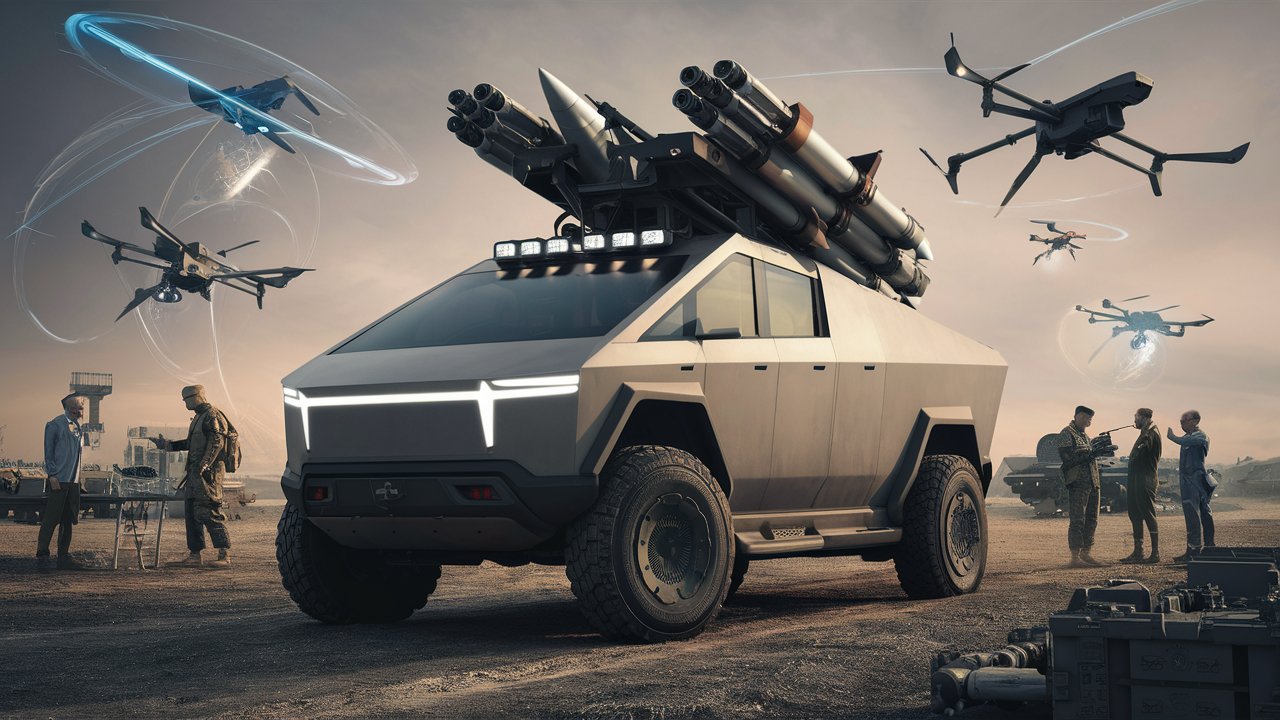
We are witnessing a decisive shift in how defense institutions, technology giants, and disruptive manufacturers intersect. The Pentagon, long known for driving large-scale innovation through defense spending, is increasingly aligned with Big Tech companies that specialize in artificial intelligence, autonomous systems, advanced materials, and electrification. Within this evolving landscape, the Tesla Cybertruck has emerged as a symbol of unconventional design meeting industrial-grade resilience. More than a consumer vehicle, it represents a broader movement toward adaptable, technology-driven mobility solutions that appeal to both civilian and government sectors. We explore how these forces converge, what this means for future defense capabilities, and why the Cybertruck has become a focal point in discussions around military-grade innovation.
Pentagon and Big Tech: A Strategic Innovation Alliance
The pentagon big tech tesla cybertruck relationship is no longer limited to software contracts or data infrastructure. We observe a deepening alliance that spans cloud computing, artificial intelligence, cybersecurity, robotics, and advanced transportation systems. Major technology firms now play a direct role in developing solutions that enhance situational awareness, operational efficiency, and logistical resilience. This collaboration allows the Pentagon to accelerate innovation cycles while leveraging private-sector expertise that would otherwise take years to replicate internally.
We see Big Tech contributing scalable platforms capable of processing massive data streams in real time, supporting autonomous navigation, predictive maintenance, and battlefield communication. This shift marks a departure from traditional defense contractors alone defining innovation. Instead, agile technology companies influence procurement decisions, research priorities, and long-term strategic planning. The integration of commercial technology into defense systems has become a cornerstone of modern military readiness.
Tesla’s Position Within the Big Tech Ecosystem
While Tesla is often categorized as an automotive manufacturer, we recognize it as a Big Tech-adjacent innovator. Tesla’s core strengths lie in software-defined vehicles, over-the-air updates, AI-driven autonomy, and advanced battery systems. These attributes align directly with Pentagon priorities focused on adaptability, efficiency, and reduced logistical burdens. The company’s vertically integrated approach enables rapid iteration and deployment of new technologies, a critical advantage in defense-related applications.
We identify Tesla’s innovation model as particularly relevant to government agencies seeking platforms that evolve without complete hardware replacement. This software-first philosophy resonates with defense modernization efforts, where flexibility and long-term cost control are essential. Within this context, the pentagon big tech tesla cybertruck stands out as a platform with unique structural and technological characteristics.
Tesla Cybertruck: Design, Durability, and Strategic Appeal
The Tesla Cybertruck introduces a radical departure from conventional vehicle design. Its exoskeleton, constructed from ultra-hard stainless steel, delivers enhanced durability and resistance to deformation. We view this material choice as particularly attractive to defense and security agencies that prioritize survivability, low maintenance, and structural integrity under extreme conditions.
Beyond its exterior, the Cybertruck’s electric drivetrain offers operational advantages. Electric vehicles reduce dependency on traditional fuel supply chains, which are often vulnerable in conflict or disaster scenarios. Silent operation, instant torque, and simplified mechanical systems contribute to tactical flexibility and reduced maintenance overhead. These characteristics align with Pentagon interests in resilient and efficient transport solutions.
Electrification and Autonomy in Defense Mobility
We observe a growing emphasis on electrification and autonomous systems within Pentagon research and procurement strategies. Electric vehicles support decentralized energy models, including renewable integration and mobile power generation. The Cybertruck’s battery capacity and power output capabilities position it as more than a transport vehicle; it functions as a mobile energy asset.
Autonomy further enhances strategic value. Tesla’s advancements in driver-assistance and autonomous software demonstrate how commercial technology can transition into government use cases. While defense applications require additional safeguards and customization, the underlying technology provides a foundation for unmanned logistics, convoy operations, and remote deployment. The intersection of Big Tech autonomy and Pentagon requirements creates a fertile ground for innovation.
Pentagon Procurement Trends and Commercial Technology
Pentagon procurement has evolved to favor dual-use technologies that serve both civilian and military markets. We recognize this as a response to faster innovation cycles and cost efficiency. Commercial platforms like the Cybertruck reduce development timelines and enable rapid scaling. This approach allows defense agencies to adopt proven technologies while focusing internal resources on mission-specific adaptations.
We see procurement strategies increasingly prioritizing modularity, software upgradability, and interoperability. Tesla’s ecosystem-driven approach aligns with these goals, offering vehicles that improve over time rather than depreciate technologically. This paradigm shift underscores why Big Tech partnerships have become integral to defense planning.
Security, Cyber Resilience, and Software Control
With increased reliance on software-defined systems comes heightened focus on cybersecurity. We acknowledge that the Pentagon’s collaboration with Big Tech emphasizes hardened networks, encrypted communications, and resilient architectures. Tesla’s experience in securing connected vehicles contributes valuable insights into managing distributed systems at scale.
We note that software control enables rapid response to emerging threats through updates and patches. This capability is critical in environments where vulnerabilities can have strategic consequences. The convergence of Pentagon security standards and Big Tech software expertise strengthens overall system resilience.
Geopolitical Implications of Pentagon and Big Tech Synergy
The alignment between the pentagon big tech tesla cybertruck carries geopolitical significance. Nations that effectively integrate commercial innovation into defense frameworks gain strategic advantages in speed, adaptability, and technological leadership. We see this synergy influencing global defense postures and prompting other countries to pursue similar public-private partnerships.
The Cybertruck, as a symbol of unconventional innovation, represents a broader trend where nontraditional platforms challenge established norms. This shift encourages competitive acceleration across industries and reinforces the importance of technological sovereignty.
Conclusion
We conclude that the convergence of the pentagon big tech tesla cybertruck reflects a transformative moment in defense and technology integration. This relationship extends beyond procurement into a shared vision of adaptable, software-driven, and resilient systems. The Cybertruck embodies key attributes valued by modern defense strategies: durability, electrification, autonomy potential, and continuous improvement through software. As Big Tech continues to influence Pentagon innovation, platforms like the Cybertruck illustrate how commercial ingenuity reshapes the future of mobility, security, and strategic readiness.
Frequently Asked Questions
Why is the Pentagon interested in Big Tech partnerships?
We see Big Tech partnerships enabling faster innovation, access to cutting-edge software, and scalable solutions that enhance defense capabilities.
What makes the Tesla Cybertruck relevant to defense discussions?
The Cybertruck offers exceptional durability, electric efficiency, and software-driven adaptability, aligning with modern military and government needs.
Is the Cybertruck designed specifically for military use?
We recognize it as a commercial platform with characteristics that make it adaptable for government and defense applications.
How does electrification benefit military operations?
Electric vehicles reduce fuel dependency, enable silent operation, and support decentralized energy strategies.
Will Big Tech continue shaping Pentagon innovation?
We anticipate sustained collaboration as technology becomes increasingly central to defense strategy and operational effectiveness.